














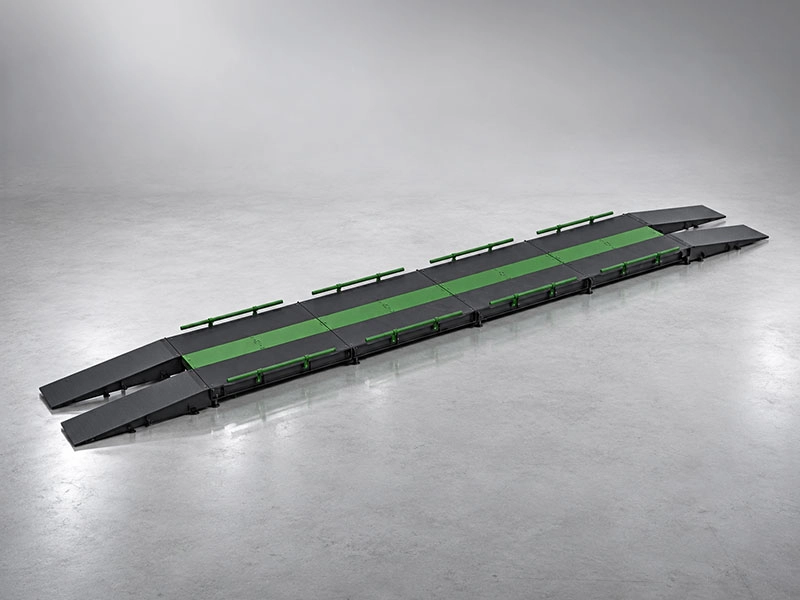
WB-X800F I-Beam Steel Platform Truck Scale
- Capacity
- 40 t – 100 t
- Dimensions
- 3×6 – 3×22 m
Bagging machines for grain, fertiliser, pellets, coal and powders. 5–50 kg bags, ±50–200 g accuracy. Let us help you choose the right model.

M-DF1Double Gate Bagging Machine
M-DB1Double Belt Bagging Machine
M-SF1Single Gate Bagging Machine
M-SB1Single Belt Bagging Machine
M-SF2Economical Single Gate Bagging Machine
M-AF1Auger Bagging Machine
M-DB2-2LTwo-Station Double Belt Bagging Machine ProBBF big bag filling machine for powders and granules: 500–2000 kg bags, 15–30 bags an hour, fed by gravity, belt or auger.
All Big Bag Filling Machines modelsWeigh-based liquid filling machine for jerrycans, tins, pails and drums: two-stage fast and slow filling, net or gross mode, Ex-proof option.
All Liquid Filling Machines modelsTruck scales for surface or pit installation, with steel-reinforced concrete, I-beam or V-beam steel decks. 6–22 m long, 40–100 t capacity.

WB-X800FI-Beam Steel Platform Truck Scale
WB-X600V-Beam Bridge Type Truck Scale
WB-X800PI-Beam Steel Pit Type Truck Scale
WB-X400PSteel-Reinforced Pit Type Truck Scale
WB-X400FSteel-Reinforced Concrete Truck ScaleCheckweighers that weigh every pack in motion and reject under- and overweight packs: CW, and MCW for compact lines. Rejection, reporting, retrofit.
All Checkweighers modelsHeavy-duty floor scales: CP, TP, U-type pallet scale, MB modular, steel bar and marble scales. Four OIML R60 C4 load cells, sized to the load.
All Heavy Duty Scales modelsBS single load cell platform scale: 30 kg–1.5 t, double-chassis electronic construction and dual-range weighing for bench and packing use.
All Bench Scales modelsMonorail scales for abattoirs and meat plants: carcasses are weighed on the rail. Fitted to your existing line, stainless or galvanised.
All Monorail Scales modelsLivestock scales for cattle, sheep, goats and sacrifice shares: the 80 mm low-profile BBH, gated KBH and a 7-point share scale.
All Livestock Scales modelsBK belt weigher for weighing bulk material on the conveyor without stopping the line: 800–2000 mm belts, flows up to 6000 t/h.
All Belt Weighers modelsFarms, feedlots and grain businesses.
Weighbridge yards, warehouses and dispatch.
Packing, filling and end-of-line checking.
Bulk material and vehicle weighing.
Liquid and powder filling.
Vehicle and platform weighing.
Surface and pit-mounted weighbridges for trucks and tractors.
Cattle and small livestock; low platforms for the farm.
Floor scales, pallet scales and single-cell platform scales.
Continuous flow and totalised weight on the belt.
Bag, big bag and liquid filling; automatic weighing lines.
Weighs packed products in line and rejects under- and overweight.
WB-X400F is a surface-mounted concrete truck scale whose deck is made from a steel frame filled with pre-stressed steel reinforcement and C50 grade concrete. It sits in the mid, or standard, segment of the WB-X range and suits factories, quarries and haulage yards that see heavy vehicle traffic but would rather avoid excavation and pit construction. The F in the model code means the scale stands on top of the ground, while X400 identifies the standard concrete-deck series.
The WB-X400F platform relies on two materials working together. A welded steel frame forms the outer shell; pre-stressed steel reinforcement is placed inside it and the remaining volume is filled with C50 concrete. The resulting deck is a scaled-down application of the pre-stressed girder principle used in road bridges and viaducts: steel takes the tension, concrete takes the compression.
On site this translates into mass and stiffness. A heavy deck damps the oscillation caused by a braking or fast-entering vehicle more quickly, so the indicator settles on a stable value sooner. The concrete surface spreads the load under each tyre into the surrounding area, so a concentrated load from a single axle does not cause local sagging or surface rippling. The steel frame protects the deck edges against impact and turns the deck into a single body that can be lifted as a unit.
The deck rests on compression load cells placed underneath. Each cell has a nominal capacity of 30 t, belongs to accuracy class OIML R60 C4, and has a stainless steel body with IP68 protection. The mounting hardware supplied with the cells limits horizontal movement of the platform and keeps the side force generated when a vehicle enters at an angle or brakes on the deck out of the measurement.
WB-X400F is delivered with its own ramps. There is no need to cast concrete ramps on site; the civil work comes down to preparing a flat surface with enough bearing capacity for the scale to sit on. Once that surface is ready, mechanical assembly of the platform can be finished in about an hour. Cabling, calibration and commissioning come on top of that and are planned separately.
Keeping the scale above ground has two practical consequences. First, because the underside stays open, the load cells, cables and junction box are easy to reach; nobody has to climb into a pit to clean or check them. Second, as the scale is not tied to permanent construction, it can be dismantled and set up at a new point if the plant layout changes. For businesses on leased land, contractors setting up a works site, or plants whose layout may change within a few years, this flexibility protects the value of the investment.
The trade-off of a surface installation is space. Ramps are needed at both ends of the platform, together with an area where vehicles can approach in a straight line. Where the gate is narrow and turning space is limited, the pit-type WB-X400P, which offers the same concrete construction flush with the ground, is the better option.
WB-X400F is built 3 m wide in lengths of 8, 12, 14, 16 and 20 m. The longer the platform, the more support points carry the deck: an 8 m platform rests on 6 load cells, a 12 m one on 8, the 14 and 16 m versions on 10, and the 20 m platform on 12. Capacity is set between 60 and 80 t for every size.
Length is decided by the longest vehicle using the site. Where only rigid trucks and short tippers come in, 8 or 12 m may be enough, whereas a factory gate handling articulated lorries needs 16 m or more. For drawbar combinations or long special vehicles, the 20 m platform is worth considering.
Choosing between 60 and 80 t depends on the real weight of the heaviest loaded vehicle. For example, if vehicles reach the site at around 52–55 t at most, 60 t leaves an adequate margin; if overloaded trips or heavy tippers go beyond 65 t, 80 t is the sounder choice. The scale interval can be set in two ranges, either 10/20 kg or 20/50 kg. The finer setting reads in smaller steps across the lower load range and shows differences more clearly when weighing empty vehicles and part loads.
A simple sum shows what the cell count means: the 10 cells under a 16 m platform, at 30 t each, add up to 300 t of nominal cell capacity. That figure is not the weighing capacity of the scale; it describes the structural reserve kept for an axle bearing on one corner, for impact and for dynamic effects.
The signal from the load cells is processed by a weighing indicator with a 24-bit sigma-delta converter and a conversion resolution of 1/30000. Vibration filtering software strips out fluctuations caused by a running engine or by wind and brings a steady value to the display. The dual-range function allows legal-for-trade weighing with a smaller interval in the lower range. The backlit LCD with 26 mm characters is easy to read both in daylight and on the night shift.
The indicator connects to weighbridge software running on a PC. The software stores every weighing with vehicle, company and product details, and exports and reports records in XML, PDF, HTML, TXT and spreadsheet formats. With the optional web-based database, weighings can be followed from head office or another branch. When traffic light control and plate recognition are added to the software, the vehicle’s entry, the opening of the record and the exit release are tied into a single flow that needs less operator input.
WB-X400F is used at haulage and cargo yards, factory raw material gates and in general truck weighing applications. The impact resistance of the concrete deck makes it particularly strong in these conditions:
If traffic is lighter and installation speed and platform weight matter more, compare it with the V-beam steel WB-X600; if continuous heavy duty and a top-segment load-bearing structure are wanted, compare it with the I-beam WB-X800F.
Steel frame, pre-stressed reinforcement and C50 concrete work together to form a stiff weighing surface that damps oscillation quickly.
The scale comes with its own ramps, so no ramp construction is needed on site and civil work is limited to preparing a flat base.
With the base ready, setting and joining the platform takes about an hour, and the scale can later be dismantled and taken to another area.
Compression cells rated 30 t, class OIML R60 C4, with stainless bodies, plus mounting hardware against side forces, come as standard.
A 24-bit converter, 1/30000 resolution and a choice of 10/20 kg or 20/50 kg intervals give suitable readings on light and heavy trips.
Weighings export in five file formats; a web database, traffic lights and plate recognition can be added as required.
| MODEL | DIMENSIONS (m.) | LOAD CELL (NUMBER) | CAPACITY (TON) | INSTALLMENT (Kg.) |
|---|---|---|---|---|
| TS-5-386 | 3X8 | 6 | 60-80 t | 10 / 20 kg – 20 - 50 kg |
| TS-5-3128 | 3X12 | 8 | 60-80 t | 10 / 20 kg – 20 - 50 kg |
| TS-5-31410 | 3X14 | 10 | 60-80 t | 10 / 20 kg – 20 - 50 kg |
| TS-5-31610 | 3X16 | 10 | 60-80 t | 10 / 20 kg – 20 - 50 kg |
| TS-5-32012 | 3X20 | 12 | 60-80 t | 10 / 20 kg – 20 - 50 kg |
 Vehicle Scale Applications
 Truck Scale Applications
 Cargo
Cargo Transport
The deck construction is identical: steel frame, pre-stressed reinforcement and C50 concrete. The difference is the installation. WB-X400F sits on top of the ground and vehicles drive up ramps; WB-X400P goes into a pit and its surface stays flush with the ground. If you have room for ramps and want short civil works, choose F; if you want easier manoeuvring at a narrow entrance, P is the better fit.
Yes. The WB-X400F deck is prepared in the factory rather than cast into the ground on site, so it can be dismantled, lifted by crane and taken to its new position. A flat base with adequate bearing capacity has to be prepared at the new point, and the scale must be recalibrated.
The interval is the smallest step the indicator shows. If empty or part-loaded vehicles are weighed often and small differences carry commercial value, 10/20 kg gives finer results. On sites that mainly weigh fully loaded heavy vehicles, where tonnage differences are what matters, 20/50 kg is sufficient. For trade use, keep in mind that the chosen interval must also satisfy verification requirements.
The area under the scale must be level, compacted and strong enough to carry the load; on most sites that means a flat reinforced concrete slab or pad foundations under the cell positions. The surface is left with a slight fall so rainwater does not stand under the platform. Dimensions are designed from the ground survey and the chosen platform length.
If the base is ready, setting the platform in place takes about an hour. Cable runs, indicator connection and calibration with test weights follow. Where weighings form the basis of invoicing, the verification process must also be completed before trade use begins.
If you expect to move the scale frequently, or if traffic is regular and light, the lighter steel platform of WB-X600 makes transport and assembly easier. If you need lengths up to 22 m or capacity up to 100 t, look at the steel WB-X600 or WB-X800F series; WB-X400F tops out at 20 m and 80 t.
Quote requested forWB-X400F Steel-Reinforced Concrete Truck Scale
Still with you after installation
Send repair, maintenance and calibration requests through the Technical Service page or by phone.