














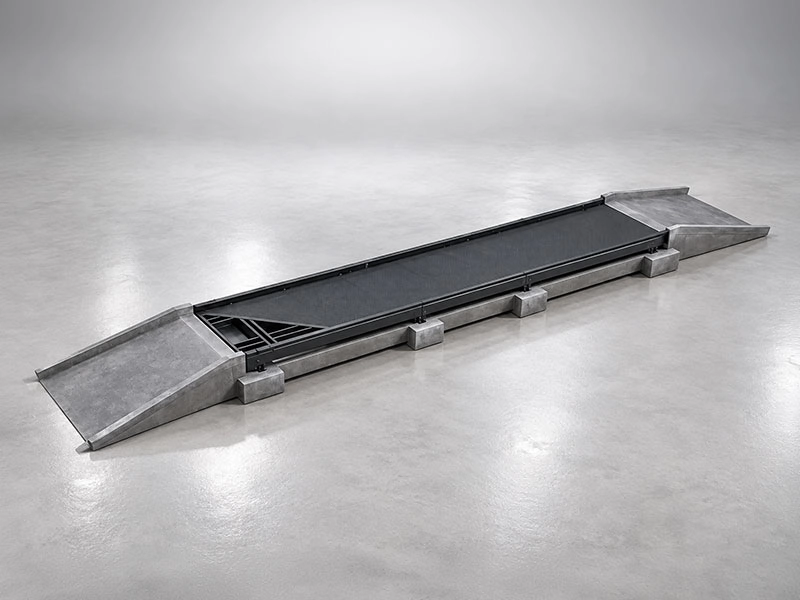
WB-X600 V-Beam Bridge Type Truck Scale
- Capacity
- 40 t – 100 t
- Dimensions
- 3×6 – 3×22 m
Bagging machines for grain, fertiliser, pellets, coal and powders. 5–50 kg bags, ±50–200 g accuracy. Let us help you choose the right model.

M-DF1Double Gate Bagging Machine
M-DB1Double Belt Bagging Machine
M-SF1Single Gate Bagging Machine
M-SB1Single Belt Bagging Machine
M-SF2Economical Single Gate Bagging Machine
M-AF1Auger Bagging Machine
M-DB2-2LTwo-Station Double Belt Bagging Machine ProBBF big bag filling machine for powders and granules: 500–2000 kg bags, 15–30 bags an hour, fed by gravity, belt or auger.
All Big Bag Filling Machines modelsWeigh-based liquid filling machine for jerrycans, tins, pails and drums: two-stage fast and slow filling, net or gross mode, Ex-proof option.
All Liquid Filling Machines modelsTruck scales for surface or pit installation, with steel-reinforced concrete, I-beam or V-beam steel decks. 6–22 m long, 40–100 t capacity.

WB-X800FI-Beam Steel Platform Truck Scale
WB-X600V-Beam Bridge Type Truck Scale
WB-X800PI-Beam Steel Pit Type Truck Scale
WB-X400PSteel-Reinforced Pit Type Truck Scale
WB-X400FSteel-Reinforced Concrete Truck ScaleCheckweighers that weigh every pack in motion and reject under- and overweight packs: CW, and MCW for compact lines. Rejection, reporting, retrofit.
All Checkweighers modelsHeavy-duty floor scales: CP, TP, U-type pallet scale, MB modular, steel bar and marble scales. Four OIML R60 C4 load cells, sized to the load.
All Heavy Duty Scales modelsBS single load cell platform scale: 30 kg–1.5 t, double-chassis electronic construction and dual-range weighing for bench and packing use.
All Bench Scales modelsMonorail scales for abattoirs and meat plants: carcasses are weighed on the rail. Fitted to your existing line, stainless or galvanised.
All Monorail Scales modelsLivestock scales for cattle, sheep, goats and sacrifice shares: the 80 mm low-profile BBH, gated KBH and a 7-point share scale.
All Livestock Scales modelsBK belt weigher for weighing bulk material on the conveyor without stopping the line: 800–2000 mm belts, flows up to 6000 t/h.
All Belt Weighers modelsFarms, feedlots and grain businesses.
Weighbridge yards, warehouses and dispatch.
Packing, filling and end-of-line checking.
Bulk material and vehicle weighing.
Liquid and powder filling.
Vehicle and platform weighing.
Surface and pit-mounted weighbridges for trucks and tractors.
Cattle and small livestock; low platforms for the farm.
Floor scales, pallet scales and single-cell platform scales.
Continuous flow and totalised weight on the belt.
Bag, big bag and liquid filling; automatic weighing lines.
Weighs packed products in line and rejects under- and overweight.
WB-X800F is a surface-mounted, full steel truck scale whose platform is carried by I-beams in high-strength IPE structural steel. It sits in the top, premium segment of the WB-X range and is designed for factories, logistics hubs and bulk cargo sites with continuous heavy vehicle traffic. It is configured 3 m wide, 6–22 m long and with capacities from 40 to 100 t.
Also known in the field as the “column type” scale, the I-beam system is the longest-established structural layout for vehicle scales. In WB-X800F, rolled IPE sections form the backbone of the platform. Their I-shaped cross-section concentrates most of the material in the top and bottom flanges, giving far higher bending strength from the same weight of steel. The top plate that closes over them forms the weighing surface that spreads tyre loads onto the beams.
The value of this structure in heavy duty lies in a clear and predictable load path. Each axle presses on the deck plate, the plate on the main beams, and the beams on the load cells. Because it is known where the load travels, the platform’s behaviour does not change over the years; if damage appears in one area, its cause and the repair point are easy to identify. Since rolled sections come in standard sizes, part-by-part renewal is also straightforward when needed.
The thickness of the top plate varies with capacity and averages around 10 mm. A thick deck plate combined with closely spaced I-beams carries the concentrated wheel load of a loaded tipper or a multi-axle trailer without leaving a permanent mark on the surface.
WB-X800F is built in nine lengths. The shortest configuration is 6 m long with 4 load cells and 40 t; it suits short tippers, urban delivery trucks and tight sites. At 8 m there are again 4 cells, at 10 and 12 m there are 6, and 40, 50 or 60 t can be chosen for these three lengths. Most rigid trucks are covered within this range.
The 14 m platform rests on 6 cells and comes in 60 or 80 t. At 16 and 18 m the cell count rises to 8, and at 20 and 22 m to 10; for these four lengths capacity is set at 60, 80 or 100 t. Sites weighing articulated lorries generally look at 16–18 m, while sites taking drawbar combinations or long special loads consider 20–22 m.
The relationship between cell count and length decides the span at which the I-beams are supported. For example, the 8 cells under a 16 m platform form four pairs of support lines facing each other across the platform; dividing the 16 m between the end lines into three spans gives about 5.3 m per span. At 30 t nominal per cell, the 8 cells add up to 240 t. Do not confuse that total with what the scale is rated to weigh; it is the structural reserve kept for an axle stopping directly over one cell and for dynamic effects as vehicles drive on.
The scale interval is in the 20–50 kg range and is used with dual-range weighing: a fine step in the lower load range, a step suited to the capacity in the upper range. On a site where returning empty vehicles and part loads are weighed often, this stops light weighings from reading coarsely even on a 100 t scale.
WB-X800F is installed above ground, and vehicles drive onto the platform over concrete ramps cast on site. Assembly is fairly simple: the load cells are placed on the prepared flat base or pad foundations, and the I-beam platform sections are set on them and joined. With no pit to excavate, construction time is shorter, and obstacles such as groundwater or rocky ground stop being a problem.
The biggest everyday gain of a surface structure is access. As the underside and sides of the beams stay open, load cells, cables and welds can be inspected by eye, and mud or snow that gets under the platform is easy to clear. During routine maintenance, the condition of the paint, the points where beams sit on the cells and the ramp transitions can be reviewed in a walk-round of a few minutes.
Since the scale is not tied to a permanent pit, it can also be dismantled later and taken to another site. At the new location the base and ramps have to be prepared and the calibration repeated.
The compression load cells beneath the platform have stainless steel bodies, IP68 protection and accuracy class OIML R60 C4. Mounting kits supplied with the cells restrain the lateral loads that arise from braking and angled entry. Their signal goes to a weighing indicator equipped with a 24-bit sigma-delta converter, 1/30000 internal resolution and a vibration filter. The indicator weighs in dual range, and its backlit LCD with 26 mm high digits is easy to read in the weighbridge office.
The weighbridge software archives weighings in a database; records can be exported as XML, PDF, HTML, TXT or spreadsheet output and shared with accounts and dispatch. The web-based database option lets businesses with several plants follow every scale from head office. Traffic lights and a plate recognition camera work with the software to speed up bringing vehicles onto the scale and opening records at busy times.
Compared with the other surface-mounted models in the series, WB-X800F differs in its load-bearing system. The concrete-deck WB-X400F offers a stiff, heavy solution in the mid segment but is limited to 20 m and 80 t. The plate-built V-beam WB-X600 covers the same size and capacity range with a light, modular structure. WB-X800F builds that same range on rolled I-beams for the heaviest, uninterrupted service. The difference shows on sites where many loaded lorries cross every day, the scale works non-stop through each shift and the platform will stay in the same spot for decades.
High-strength rolled structural steel forms the platform’s load-bearing backbone and gives predictable behaviour in heavy duty.
A top plate chosen by capacity, averaging 10 mm, passes concentrated wheel loads to the beams without marking the surface.
Nine lengths, 4 to 10 load cells and length-dependent capacity options from 40 to 100 t.
The surface installation lets cells, cables and welds be checked by eye, and cleaning is easy.
Compression cells of 30 t with IP68 protection and mounting kits that restrain side loads come as standard.
Reporting weighbridge software, optional web database, traffic light and plate recognition integration.
| MODEL | DIMENSIONS (m.) | LOAD CELL (NUMBER) | CAPACITY (TON) | INSTALLMENT (Kg.) |
|---|---|---|---|---|
| TS-1-364 | 3X6 | 4 | 40 t | 10/20 kg |
| TS-1-384 | 3X8 | 4 | 40-50-60 t | 10/20 kg |
| TS-1 -3106 | 3X10 | 6 | 40-50-60 t | 10/20 kg |
| TS-1 -3126 | 3X12 | 6 | 40-50-60 t | 10/20 kg |
| TS-1 -3146 | 3X14 | 6 | 60-80 t | 20 kg - 50 kg |
| TS-1 -3168 | 3X16 | 8 | 60-80-100 t | 20 kg -50 kg |
| TS-1 -3188 | 3X18 | 8 | 60-80-100 t | 20 kg - 50 kg |
| TS-1-3208 | 3X20 | 10 | 60-80-100 t | 20 kg - 50 kg |
| TS-1 -3228 | 3X22 | 10 | 60-80-100 t | 20 kg - 50 kg |
 Truck Scale Applications
 Cargo
Cargo Transport
IPE is a standard rolled steel section with an I-shaped profile and parallel flanges. Because most of its material sits in the top and bottom flanges, it offers high resistance to bending. Used as the main load-bearing member in a scale platform, it passes heavy wheel loads to the load cells without deflecting.
Both are premium models with I-beams and full steel platforms, offered in the same size and capacity range. WB-X800F is installed above ground and vehicles climb concrete ramps. WB-X800P is mounted below ground in a pit; the platform stays level with the road and eases manoeuvring at narrow entrances.
The 6 m, 4-cell, 40 t configuration is for businesses whose site only sees short vehicles: two-axle tippers, urban delivery trucks or compact plant. If articulated lorries may come to the site, a longer platform should be chosen.
The ramps are built at the site where the scale is installed. Slope, length and the joint with the platform are drawn up during project design, taking into account how high the deck stands and which vehicles will use it. A ramp that finishes level with the platform is important for vehicles to drive on without a jolt.
With the underside open, maintenance relies largely on visual checks: cell seating points, cable connections, welds and painted surfaces are inspected at regular intervals. Mud and snow under the platform are cleared, and the empty scale is checked for a zero reading.
Yes. As the scale is installed above ground and not tied to a pit, the platform can be dismantled and taken to the new site. There the base and concrete ramps are prepared and the scale is recalibrated.
Quote requested forWB-X800F I-Beam Steel Platform Truck Scale
Still with you after installation
Send repair, maintenance and calibration requests through the Technical Service page or by phone.